Varroa destructor arrived in Britain in 1992 and has been part of beekeeping here ever since. If you keep bees, you have mites. The only real question is how many, and what you are going to do about them. Left unchecked, a colony's mite population climbs steadily through the summer until the bees emerging in late summer and autumn are weakened by viruses and unlikely to see spring. Managed well, those same colonies go into winter calm, well fed and reasonably clean. The difference is rarely one clever trick. It is a plan, followed consistently.
What Integrated Pest Management Means in a Hive
Integrated pest management, or IPM, is often mistaken for a no-chemicals approach. It isn't. It is a sequence: monitor the pest, compare what you find against a threshold, act with the least disruptive effective method first, and only then reach for a treatment. Chemicals stay in the toolbox, but they are used deliberately rather than by habit.
Applied to varroa, that means counts before treatments, combinations rather than a single product, and rotation so that mites do not get comfortable with anything you use repeatedly. It also means accepting that varroa management is a routine, not an emergency. The beekeepers who lose colonies to mites are usually the ones who stopped looking.
Monitoring: You Cannot Manage What You Have Not Counted
Estimate your mite load at least three times a year: once in spring, once in midsummer, and once after your main autumn treatment. Sampling from a frame of open brood is best, because that is where mites concentrate. Take bees from the same type of comb each time so your figures are comparable, and write the numbers down.
- Sugar roll (icing sugar shake). Brush roughly 300 bees — about half a mug — into a jar with a mesh lid. Add a good heap of icing sugar, roll for a minute, then shake the sugar out over a white tray and count the mites. The bees go back unharmed. It is less accurate than an alcohol wash, but it is repeatable and costs nothing but bees' dignity.
- Alcohol wash. The same sample of bees, shaken in a jar of alcohol. It kills the bees, which is why many beekeepers avoid it, but it gives the cleanest count and is the method of choice if you need a firm figure before spending money on treatment.
- Sticky board (natural mite drop). Slide a greased board under an open mesh floor for a week and count what falls. Divide by seven for a daily drop. It underestimates badly and is affected by brood, weather and grooming, but it is a useful trend line across a season.
- Drone brood check. Uncapping a few dozen drone cells and counting mites gives a rough reading of how heavily infested the brood nest is. Quick, free, and a good sanity check alongside another method.
Whichever you choose, do it the same way every time. A rough number you trust beats a precise number you only measure once.
Turning Counts Into Decisions
Thresholds are usually expressed as mites per day on a sticky board or mites per hundred bees, and they shift with the season, the size of the colony and how much sealed brood is present. A strong colony in July can carry a load that would overwhelm a small nucleus in September. Rather than memorising a single figure, use the varroa calculator on BeeBase, the National Bee Unit's beekeeping resource, which factors in your location, colony size and time of year.
Some things override any number. If you see bees with deformed wings, a spotty brood pattern with sunken cappings, or mites clearly riding on the backs of workers, act now. Visible disease means the mites have already been at work for weeks.
Authorised Treatments in the UK
Only use products authorised by the Veterinary Medicines Directorate, and follow the label exactly on dose, temperature, timing and whether supers must be removed. Home-made mixes and imported products are not a shortcut; they are a risk to your bees, your honey and your neighbours' colonies.
Oxalic acid
Effective against mites on adult bees, useless against mites sealed in brood cells, so it belongs in the broodless window — a mild spell in midwinter, or a colony that has been broodless for other reasons. Trickling and sublimation products are both available; use the form and dose on the label. It is not a summer treatment while brood is present.
Formic acid
Penetrates cappings, so it works when brood is present, which makes it a late-summer option before the winter bees are raised. It is strictly temperature-dependent and can harm queens or brood if applied outside the label's range. Ventilation matters, and so does your own safety kit.
Thymol
Needs warmth to vaporise properly, generally well above 15°C, so late summer and early autumn are the practical windows. Expect two applications. It can taint honey, so supers come off first, and you may see some brood removal while it is in the hive.
Amitraz and pyrethroids
Amitraz-based and pyrethroid strips still exist, but resistance in UK mites is well established, particularly to pyrethroids. If you use one, check its effectiveness afterwards with a follow-up count. Never use the same active year after year.
Non-Chemical Tools Worth Using
Drone brood trapping is the classic low-tech move: give the colony a frame of drone comb, let the bees cap it, then cut it out or freeze it and return it. Do not let those drones emerge, or you are farming mites rather than removing them.
Brood breaks do real work too. A shook swarm, an artificial swarm, or a period with the queen caged interrupts mite reproduction, because varroa needs sealed brood to multiply. Add regular comb replacement, keeping colonies strong, and buying in stock selected for hygienic behaviour where you can, and the pressure drops before you open a single treatment.
A Workable Year of Varroa Management
- Spring: first count of the year. Check for deformed wing virus. Cull drone brood if you like, and keep an eye on colony strength.
- Early summer: monitor again. Use swarm control to create a brood break where it fits your management.
- Late summer: the critical window. Mite numbers peak just as winter bees are being raised. Treat if your count or the calculator says so, and get supers off first.
- Autumn: count again four to six weeks after treatment to confirm it worked. Feed and prepare for winter.
- Winter: if the colony is broodless, oxalic acid in a mild spell cleans up the mites that survived.
Records, Resistance and Realistic Expectations
Keep a simple notebook or spreadsheet: date, method, count, treatment, product, weather, and the count afterwards. That record tells you which treatments actually work in your apiary, and it stops you reaching for the same product out of habit. Rotate actives. Most UK colonies need some form of intervention most years, so aim for control, not elimination.
Start With One Good Count
Pick one monitoring method, use it on every colony this week, and write the numbers down. Do it again in a month. That single habit will tell you more than any article, and it puts you in a position to treat only when it is genuinely needed. If you are unsure about a diagnosis, a product label, or a legal requirement, ask your local association or a bee inspector before you act — that is what they are there for.
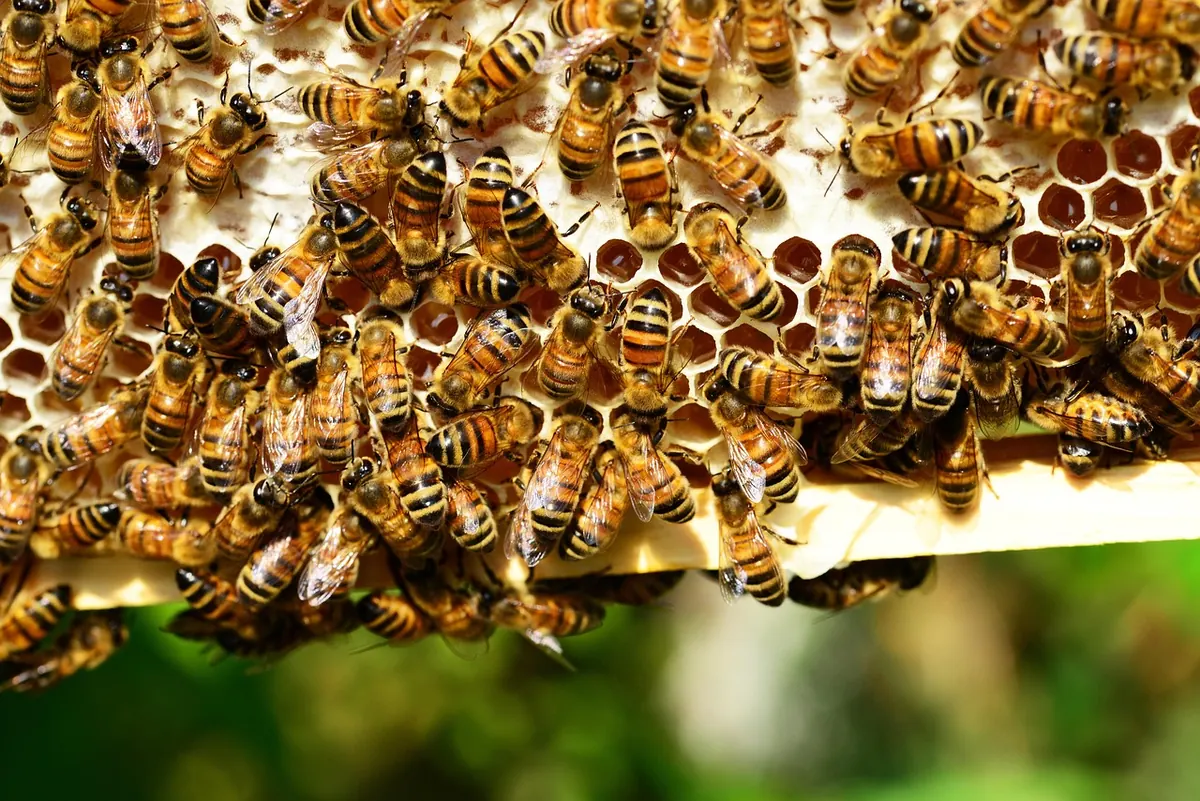
Photo: PollyDot / Pixabay