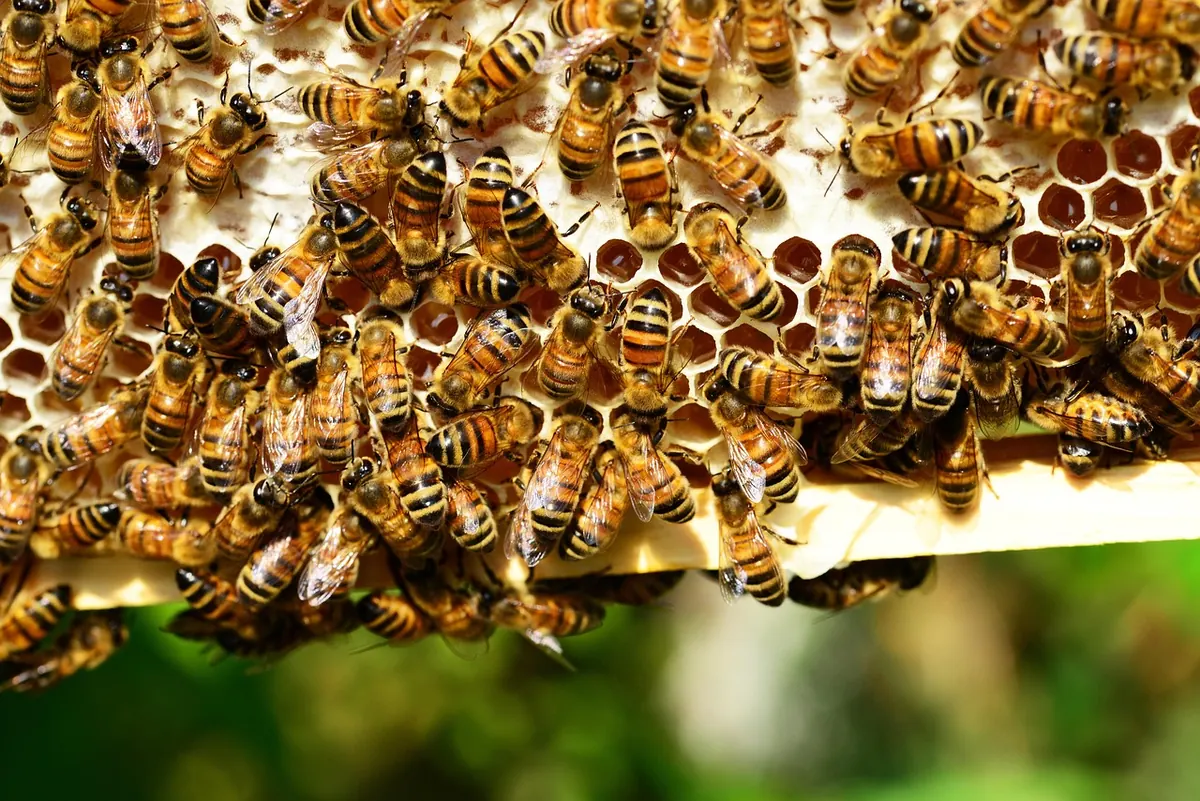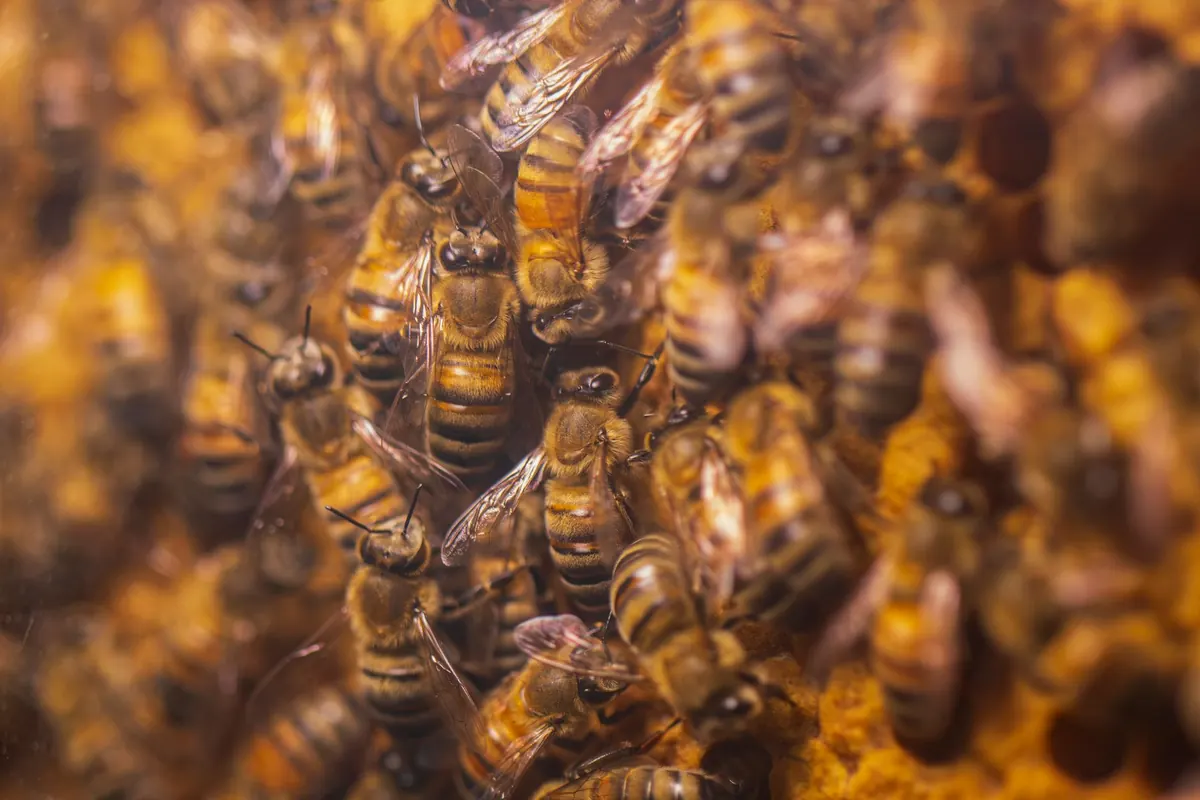
You open the hive on a warm Saturday in late May and something feels off before you even lift a frame. The note is different — a restless, low roar rather than the usual contented hum. Bees hang in a beard from the entrance. The brood box is packed to the outer combs, and along the bottom bars of two frames you find them: sealed queen cells, hanging like unshelled peanuts. Your colony is preparing to leave.
Swarming is not bad behaviour or a failure on your part. It is how a colony reproduces, and a strong colony that gets away with it takes roughly half the bees, a month of brood-rearing and most of that hive's honey crop with it. The encouraging part is that swarming is predictable. Read the signals early and you can steer the colony instead of chasing it across the parish.
Reading the signs before they go
A colony does not swarm on impulse. Pressure builds over a fortnight, and the cues are plain once you know what you are looking at.
- Queen cells along the bottom bars. Swarm cells normally hang from the lower edges of combs, often in clusters of three or more. Supersedure cells sit higher up, on the face of the comb, and usually number only one or two. The distinction matters, because you respond to them quite differently.
- A solid wall of brood. No spare comb for the queen to lay in, brood running to the outermost frames, nectar and pollen crammed into the brood nest itself.
- Drones everywhere. A colony raising plenty of drone brood early in the season is a colony thinking about reproduction.
- Idle bees. Clusters of bees doing nothing much on the landing board or under the floor on warm evenings.
- Foraging tailing off. Field bees ease back when a colony is close to swarming, and the queen's laying slows as she slims down for flight.
- A different note. That roar again. Once you have heard it next to a calm hive, you will never mistake it.
Timing matters more than anything. Check for charged cells — open cells with a fat white larva floating in royal jelly. Once cells are sealed, the prime swarm has often already gone, sometimes within a day of the first capping. This is why seven-day inspections from April to July beat ten-day ones.
Removing the triggers you can actually control
Some swarming pressure is genetic, and some is down to the weather. You cannot manage either. Space, however, is in your hands.
Give supers early. A super sitting unworked for a fortnight costs you nothing; a colony going over the fence costs you a season. When bees are working the outer brood frames and the super is three-quarters full, add another. Keep drawn comb in reserve if you can — stores and brood have somewhere to go, and the queen keeps laying.
Keep brood combs reasonably fresh, replacing the oldest, darkest ones a few at a time rather than in one brutal spring clean. Shade the hive in a hot spell, and check that the floor and crown board give decent ventilation without creating a gale. Young queens swarm less readily than old ones, so requeen colonies heading into their third season.
A word on two common shortcuts. Destroying every queen cell you find buys you a week at best, and if you miss one you have lost the initiative. Clipping a queen does not stop swarming either — she simply ends up on the ground and the colony tries again with a virgin. Neither is a plan.
The artificial swarm, step by step
The classic Pagden method works with the colony's instincts rather than against them. Run it on the day you find charged queen cells.
- Find the queen. Put her, still on her frame, somewhere safe and shaded with a cover over her.
- Move the original hive a metre or so to one side, turned slightly, keeping the same entrance direction.
- Set a clean brood box on the original stand. The foragers will come straight back to this spot.
- Put the queen and her frame into the new box, with one or two more frames of brood — check them carefully for queen cells — and fill the rest with drawn comb or foundation.
- Close up the hive you moved aside. It holds the brood, the nurse bees and all the queen cells.
- In that queenless half, choose one good open cell and destroy the rest, so the colony raises one queen rather than casting a second swarm.
- Seven days later, check the queenright box and tear down any emergency cells the bees have built. In the other box, remove any further queen cells so only one remains.
Feed lightly if the weather turns wet. Expect eggs and young larvae in the queenless half roughly three to four weeks after the swarm, and if you see none, look again a week later before assuming something has gone wrong. If you have a spare nucleus box, a simpler split works too: move the queen, two frames of brood and a frame of stores into the nuc and let the original colony raise a new queen.
Bait hives: a place for a swarm to land
Somewhere within a mile or so, a colony you do not own will swarm this summer. A bait hive gives it a reason to choose your garden.
- Use a box of roughly brood-box volume — a spare national brood box is ideal, a nuc is on the small side but will sometimes work.
- Old brood comb is the strongest lure there is. A box that smells of bees beats anything new and shiny.
- Site it high, around three metres, in dappled shade with a clear flight path and a small entrance.
- Check it weekly from May to July. Swarms arrive fast and settle quickly.
Once bees move in, leave them a few days to settle, then move the box in the evening to its permanent stand. Treat it as a new colony: feed if needed, and check for disease before you combine it with anything else.
If your colony swarms anyway
Watch where they settle. A swarm usually lands within twenty minutes, often on a hedge, fence post or branch a short distance away. If it is reachable, shake it into a box or nuc, leave it somewhere cool and dark until evening, then hive it. If it is halfway up an oak, accept it and carry on.
Back at the hive you will find roughly half the bees, capped brood and queen cells. Do not destroy all of them. Without a queen and without young larvae, the colony cannot make another, and you will be left with a hopelessly queenless box of ageing bees. Leave one good open cell.
Then be patient. Check three to four weeks on for eggs and larvae. If there is still nothing, and no fresh queen cells, unite the colony with a stronger one using the newspaper method rather than watching it decline.
A routine that keeps you ahead
Swarm control is not about stopping your bees from being bees. It is about being one step in front of them. Inspect every seven days through the swarming season. Keep a spare brood box, floor and roof ready so you can act on the day you find cells rather than ordering kit and hoping. Mark your queens, note their age, and replace the ones going into a third year. Put a bait hive up in spring and check it weekly.
Do those few things and a colony preparing to leave stops being a crisis. It becomes a decision you get to make.
Photo: Engin Akyurt / Pexels