The first jar you sell is the one that changes things. Before that you're a beekeeper with a surplus; afterwards you're a food business, and a modest set of rules comes with the title. None of it is designed to catch anyone out, and most of it can be sorted in an afternoon. Here's what applies when you sell honey in the UK, whether that's six jars at a village hall or a standing listing on your own website.
Register before you sell anything
You must register as a food business with the environmental health team at your local council, and you need to do it at least 28 days before you start trading. Registration is free, it can't be refused, and it takes a few minutes online. It isn't asking permission — but trading unregistered is an offence, and it's the first thing an officer will check.
You also need a food safety management system based on HACCP principles. For a small honey operation, the FSA's Safer Food, Better Business pack is an accepted foundation. Write down what could realistically go wrong — dirty extraction kit, honey bottled too wet and fermenting in the jar, stock sitting in a hot shed — and what you do about it. A few pages in a folder is enough, provided you actually follow them.
Hygiene training isn't a legal requirement in itself, but a Level 2 food hygiene course is inexpensive and takes an evening. It's the difference between a friendly inspection and an awkward one.
What has to appear on the label
Jars you fill and seal yourself are pre-packed food, so the Food Information Regulations apply in full. Loose honey, scooped from a bucket into a customer's own container, has lighter requirements — but you still need certain details available in writing.
For pre-packed jars, the mandatory particulars are:
- the name of the food — "honey", or a permitted description such as "blossom honey" or "honeydew honey"
- the net quantity in metric units, for example 227 g or 454 g
- the country of origin, and for blended honey the prescribed wording such as "blend of EU honeys" or "blend of non-EU honeys"
- a best before date
- the name and address of the food business operator — for UK sales, a UK address
- a lot number or batch code, so any jar can be traced back
- storage conditions, if they matter to keeping quality
Small print matters too. Mandatory text generally needs an x-height of at least 1.2 mm on ordinary jars, with a lower minimum on very small packs. And if you add anything at all to honey — fruit, nuts, chilli, essential oils — it is no longer honey. The label then needs an ingredients list and a name that describes the product honestly.
Weights and measures
Net weight means the honey, not the honey plus jar. Metric is compulsory; imperial can appear alongside as a supplementary indication, so "454 g (1 lb)" is fine while an imperial-only label is not.
Weigh accurately and allow headroom: a jar marked 454 g should hold at least 454 g, never 450 g. Check your scales with a known test weight and note the checks down. Scales used in front of a customer are being used for trade, and are expected to be of an approved type — a quick call to your local trading standards team will tell you what they expect for direct sales.
Honey-specific rules
Honey is a regulated product with its own compositional standards, and a few points trip people up.
Reserved names
Only honey that meets the standard can be called honey, and descriptions such as "comb honey" and "baker's honey" have defined meanings. "Raw" is a marketing word, not a legal category; use it if you like, but be ready to explain what you mean by it.
Composition
Moisture content has an upper limit, around 20 per cent for most honey, with heather and baker's honey allowed slightly more. Hydroxymethylfurfural (HMF), a marker of heat damage and age, has a legal ceiling too, and it climbs quickly if you warm honey hard or store it somewhere hot. Heating honey to the point where its enzymes are destroyed isn't permitted, which is one good reason to keep a warming cabinet in the 35–45 °C range. Adding anything, or filtering out pollen beyond the minimum necessary, is not allowed.
Health claims
Don't claim that honey treats or prevents anything, hay fever included. Health claims on food are tightly regulated, and a bold claim is the quickest way to attract the wrong kind of attention.
Hygiene from hive to jar
Extract somewhere you can genuinely clean — a kitchen works, but not while dinner is on. Use food-grade stainless steel or plastic, avoid cracked or badly scratched surfaces, and remember that honey is hygroscopic: it pulls moisture out of the air, so don't leave buckets open in a steamy room.
Keep pets and anyone who is unwell out of the extraction space. Wash hands, cover cuts, and clean and dry every tap, bucket and sieve between sessions. Store full buckets somewhere cool, dark and dry. At a market, jars should be clean and sealed, and handled by the lid rather than the rim.
Traceability is simple: one step back, one step forward. Note which hives each batch came from, when it was extracted and jarred, and where it went. Keep those records for at least two years — if a customer ever reports a problem, they're what let you respond properly.
Selling at markets and online
Market organisers usually ask for public liability insurance, and may want to see your registration. Tasting samples are fine if they're served hygienically: separate portions, no re-dipping, covered container. Have your business name and address on display, plus allergen information for anything flavoured.
Online selling is distance selling, which adds a step. Allergen information must be available before the customer completes the purchase, not only when the parcel arrives, and the mandatory particulars still need to travel with the honey — on the label or on paperwork in the box. Pack jars well, ship them so they don't bake in a hot van, and put a contact address on the website.
A practical checklist for your first sale
- Register with your local authority's environmental health team, at least 28 days ahead.
- Write a short food safety management document and keep it current.
- Book a Level 2 food hygiene course, and consider one for anyone who helps you.
- Draft your label, then check it against the regulations before you print.
- Have your scales checked, and build a small overweight into every jar.
- Start a batch book and keep it up to date.
- Ring environmental health or trading standards with any specific question.
None of this is onerous for a small producer, and officers are usually helpful when you ask before you act rather than afterwards. Rules and guidance do change, so treat this as a starting point rather than the last word. A short call to your local authority, or advice from a qualified food safety consultant, is far cheaper than reprinting a thousand labels.
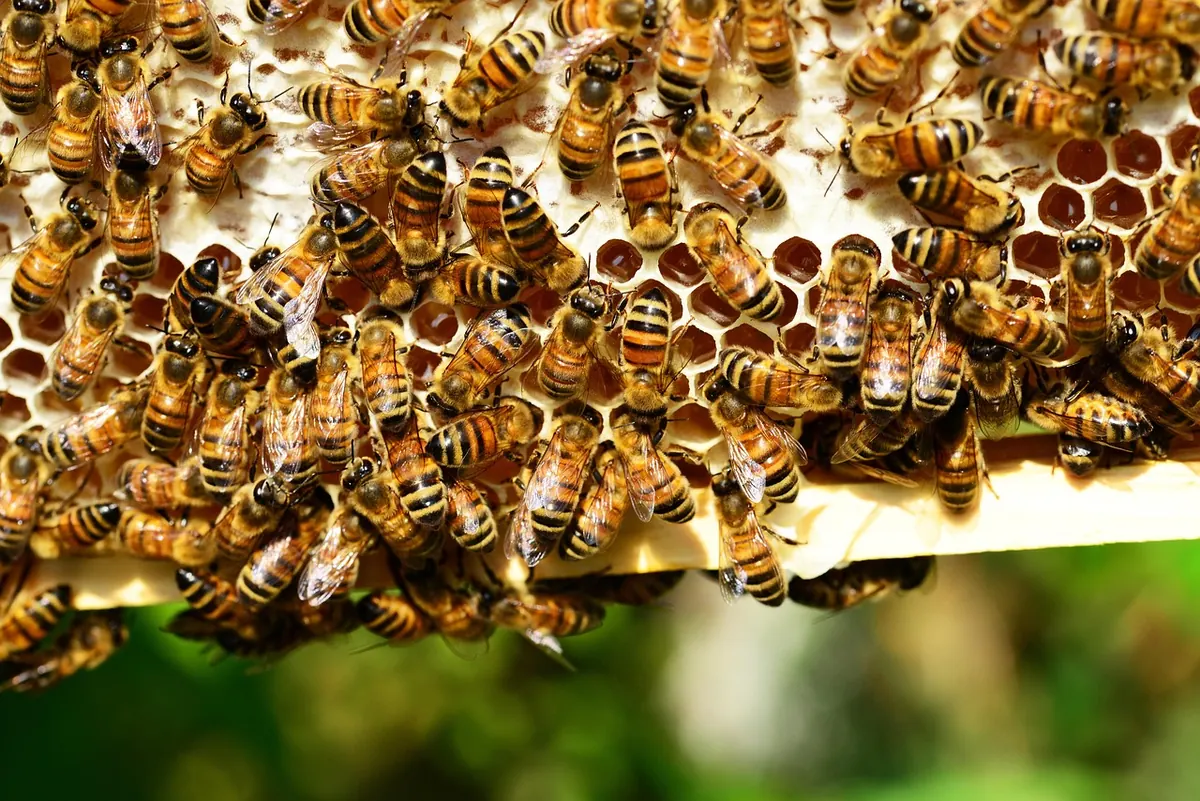
Photo: Septimiu / Pixabay